
Drink better this year! I offer wine orders customized to your palate. Reach out for one-on-one curation time with me with no commitment or minimum purchase required.
Subscribing is a way to show your appreciation for:
my wine recommendations,
any assistance I provide along your wine journey, or
my writing entertainment!
A few weeks ago, I went to a Spanish winemaker dinner in town. The winemaker was from a winery I have visited (twice)! I had met her parents and colleagues, but somehow never connected with her.
I behaved like a smitten schoolgirl when I arrived – I talked too fast, my thoughts were hard for others to follow – it’s rather silly (and embarrassing). But what can I say? I am a wino; these are the things that get my blood pumping!
The other thing that gets my blood pumping is sparkling wine - particularly traditional method, aka Champagne method, sparkling wine. In this case – it was the Cava served as a welcome drink at the dinner.
If you read my two-part Champagne articles from last year (see here and here) you will remember the history and production details behind traditional method wines. From exploding bottles to cloudy wines, eventually Champagne Problems were ingeniously solved!!
But the sparkling story doesn’t end in Champagne.
Enter Josep Raventós, whose family had been making wine since 1497. A trip to Champagne led him to produce Spain’s first traditional method sparkling wine in 1872. In other words, it was the production of the first sparkling wine where the second fermentation took place in the bottle – like Champagne.
As opposed to the bubbles being introduced to the wine by the injection of carbon dioxide (CO2) or a second fermentation inside a pressurised tank.
Precisely.
What differentiated his wine from Champagne however was the grapes used. Interestingly he didn’t use the grape varieties used in Champagne (Chardonnay, Pinot Noir, and Pinot Meunier) but rather Spanish indigenous grape varieties. Sixteen years later, his son Manuel Raventós Domènech established a blend of the three grape varieties still used in Cava today - Macabeu, Xarel•lo and Parellada. (Macabeu is also called Viura and Macabeo in other regions of Spain).
I love Spain? Where did Señor Raventós make this first sparkling wine?
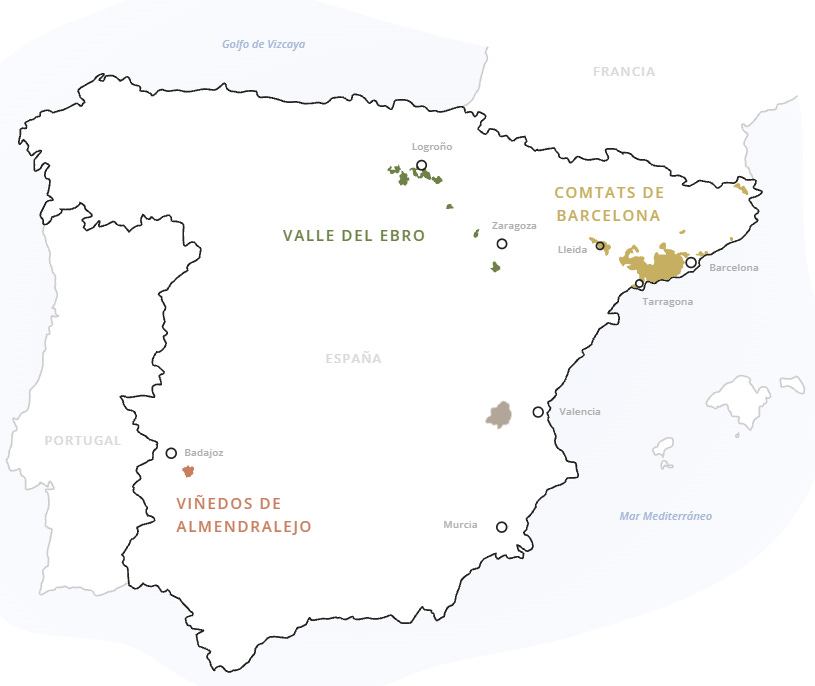
In a town called Sant Sadurní d’Anoia, today’s historical epicenter of Cava production. Sant Sadurní d’Anoia is located 40 km (20 miles) west of Barcelona, in the Penedès wine region of Catalonia in northeastern Spain. The map below shows all the regions where wines labelled as Cava can be made, although the great majority (95%) come from the Penedes region within the Comtats de Barcelona Cava zone.
I assumed Cava was the name of a region? So where does the name come from?
Cava means cave or cellar in English. The use of the term Cava started informally in the 1960s, referring to the cellars dug to store the wine, but it stuck and eventually became the formal label term under Spanish Law in 1972.
Cave! That makes sense, I remember you talking about those caves after your trip(s)!
It is really wild as there is a whole other world underground in a relatively small town – these cellars can be 20 m (66 ft) in depth and extend for kilometers. Twenty meters sounds rather benign, doesn’t it? Until I got reminded while doing my research that 20 meters is the equivalent to a building 5 or 6 storeys high.
Or in this case 5 to 6 storeys below ground level!
When we visited Sant Sadurní d’Anoia in 2017 it was so odd - our first cave tour started at the winery building and ended a couple of blocks away when we popped out at street level. It took our eyes some adjusting to daylight after hanging out in the dim cellar lighting.
Dim lighting - an ideal environment for ageing wines!!
Bingo! This is the whole point!
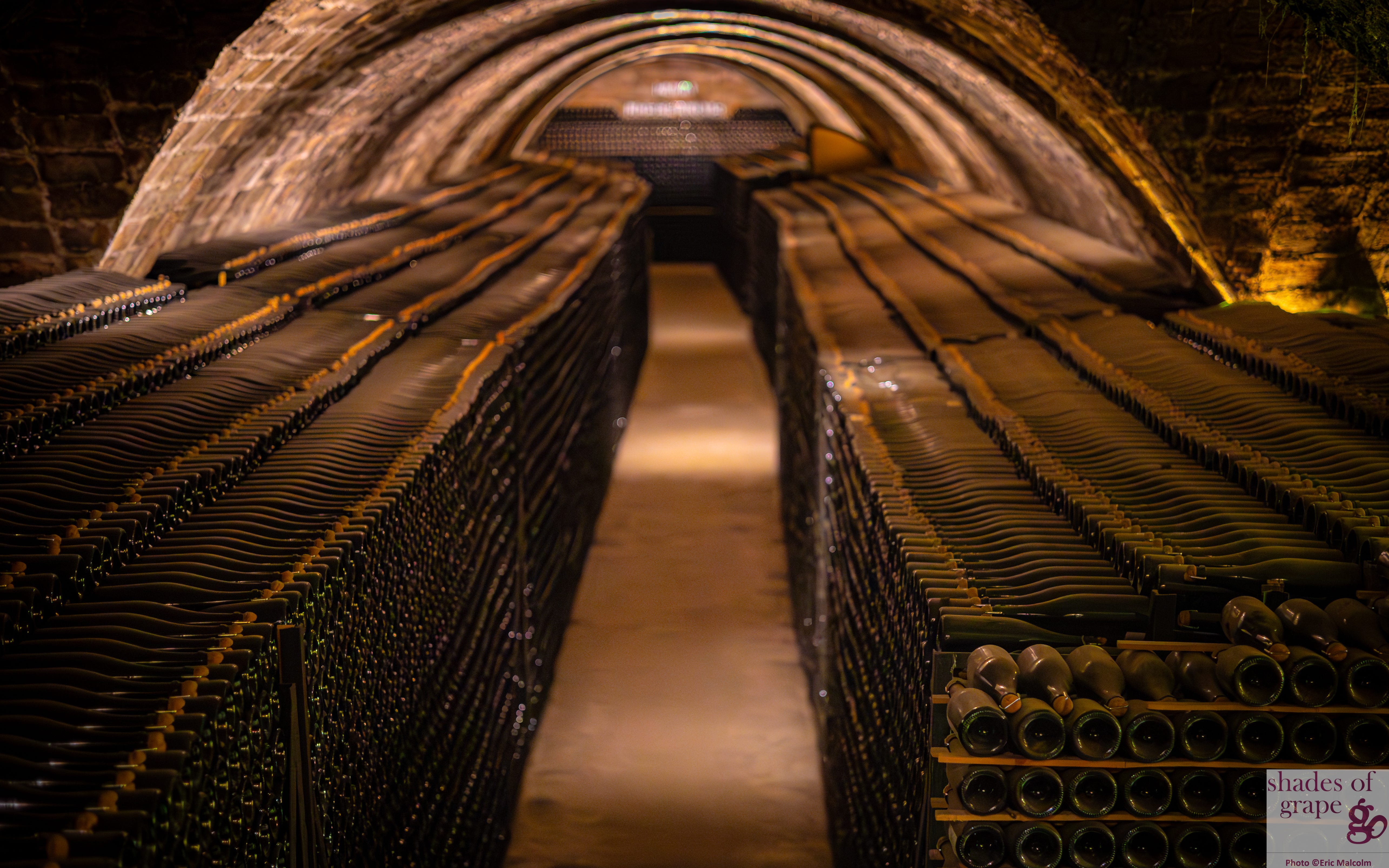
These caves are where the wine is stored during and after the second fermentation in the bottle, and then for ageing. The temperature and humidity are stable, making a perfect environment to age wine as there is no influence from the outside weather.
So back to your dinner, tell me more about the Cava?
Sumarroca Gran Reserva
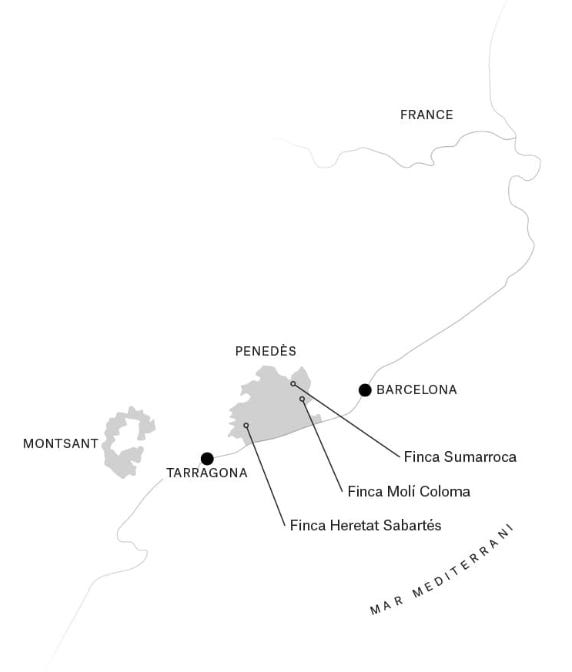
The Sumarroca family have been making wine for multiple generations, but they are relative newcomers to Penedès. Carles Sumarroca relocated there in the early 1980s, buying two country estates. Almost twenty years later they purchased an estate in Sant Sadurní d’Anoia which they renamed Finca Sumarroca – where the featured wine was made. I love the map I found on their website – for reference, Finca Sumarroca is within the Sant Sadurní d’Anoia municipality.
The term Gran Reserva for Cava means that it has been aged on the lees (spent yeast) for a minimum of 30 months. This provides the bready, toasty, yeasty, biscuit/graham wafer, and pastry notes in traditional method wines – the same attributes that Champagne possesses. Think of all the wonderful notes your nose and palate detects while visiting a bakery. These are called autolytic notes for the geeks in the room.
Thirty months – that is 2.5 years. No wonder they need that much storage space.
Yes! This is why they went down, to create more space. Champagne did the same thing. Cellars store thousands of bottles, in some case millions!
Note that the Gran Reserva level is well beyond the 9 month minimum ageing requirement for basic Cava. At 9 months of ageing, autolytic notes have not yet developed in the wine. The middle ground is the Reserva level with a minimum of 18 months of ageing, which develops more autolytic flavours and aromas.
Can you dig into ageing on lees, this sounds important.
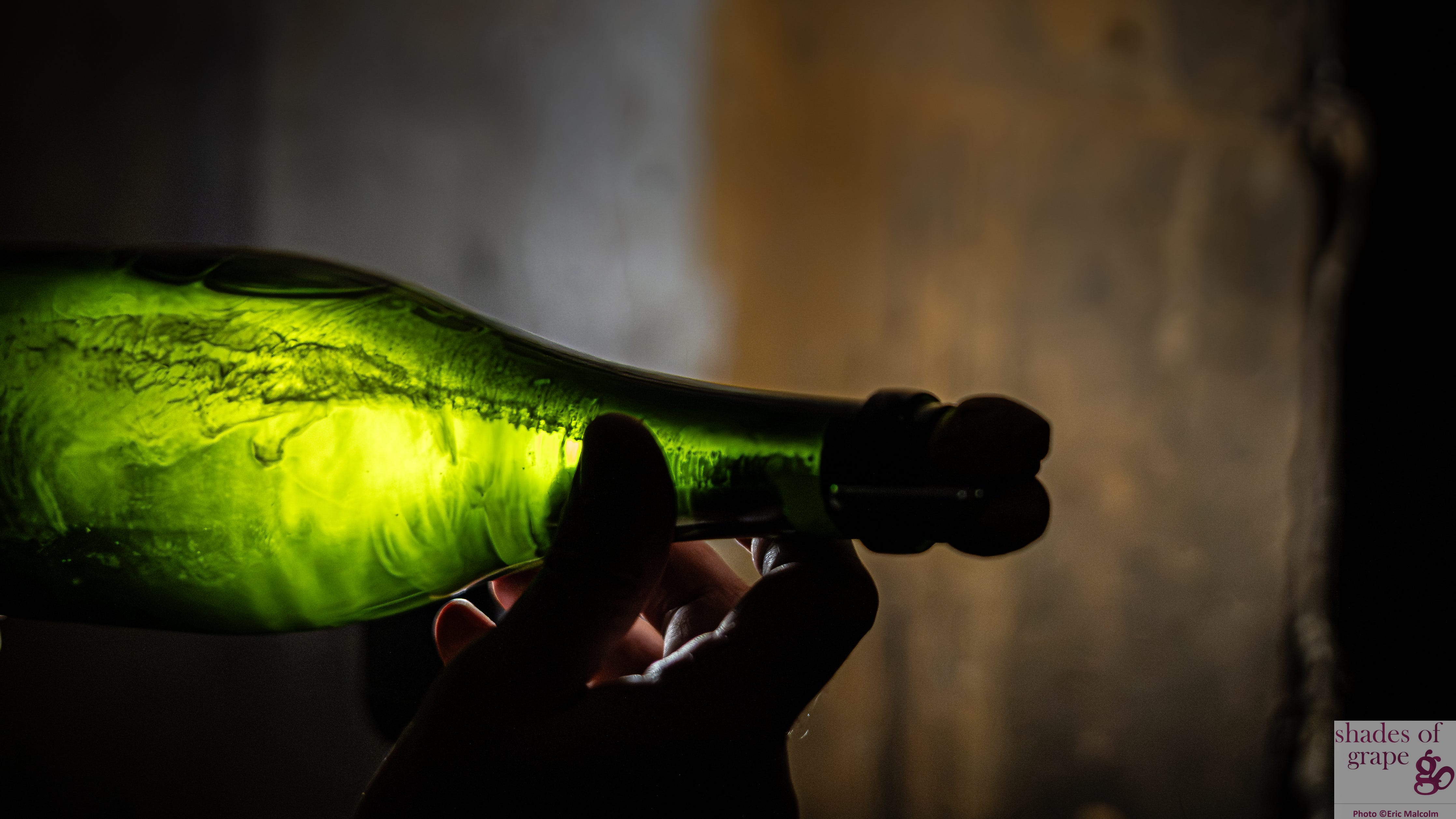
The lees are the yeast cells that remain in the wine after they are done chowing down on the sugar. For traditional method sparkling wine, because this happens in the bottle, we can just let them remain in the bottle.
This is when and where the magic happens – the yeast cells gradually break down releasing compounds that give the characteristic aromas and flavours. Surprisingly this breakdown of dead yeast typically last for 4 to 5 years but has been known to continue for 10 years.
Wowza. I never heard that before! I imagine with time the intensity of the flavour increases.
Indeed, as does the price, since the winery had to invest in the space to accommodate the wine. Considering this 2022 vintage has aged for 40 months, the featured wine is very reasonably priced at $28 Cdn. This is a wine I can easily get behind for the quality per dollar ratio.
That is actually a very high goodness per dollar ratio!
If you are also a fan of traditional sparkling wine consider checking out the Six Atmosphere Substack here - Tom has many interesting gems to offer! I love the Substack’s clever name, which refers to the pressure in the bottle created by the production of CO2 - the by-product of fermentation that produces the wine’s bubbles.
Okay I am scrolling down to get into the nitty gritty in the section where you cover the featured wine in detail.
Great – now don’t forget to see the related Shades of Grape articles too!
Enjoying my recommendations? Consider upgrading to a paid subscription.
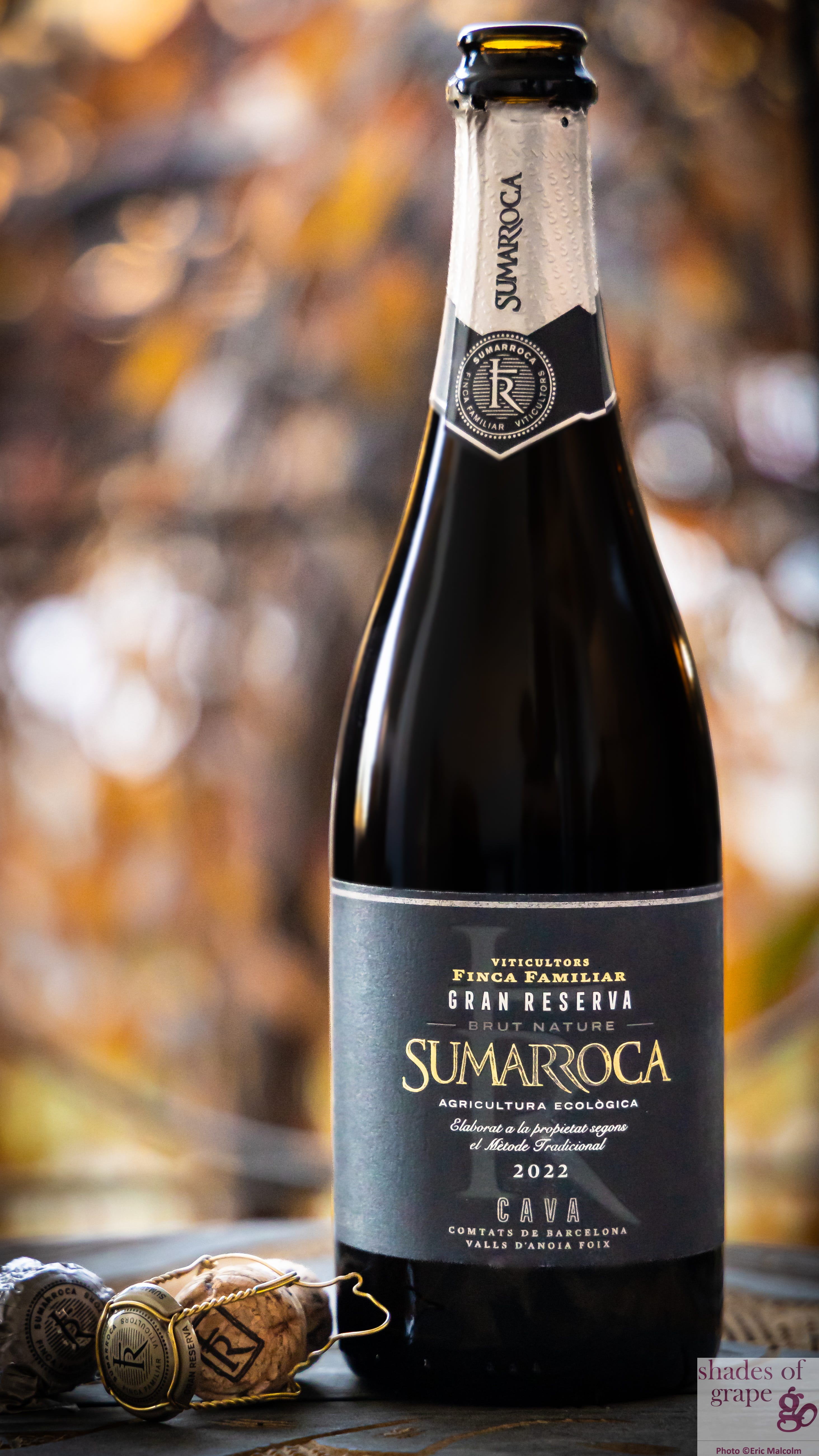
Sumarroca Gran Reserva Brut Nature Cava 2022 from Penedès, Catalonia, Spain
Style: Traditional method sparkling wine
Variety(ies): Macabeu, Xarel•lo and Parellada
This sparkling white wine had a beautiful yellow hue with notes of golden delicious apples, straw, wax, almonds, honey, pastry, toast with hints of wet stone, fresh ginger and, spice. The bubbles were gentle and fine and the wine had an extremely long finish. This wine screamed autumn in a glass!
Best pairings: Potato chips, Mixed nuts, Butternut squash ravioli with brown butter and roasted almonds, Spanish Jamon, Pork tenderloin with apple sauce, Seared scallops, Mushroom vol-au-vent pastry with thyme and cream, Croquetas, Cheeses: Baked brie and Manchego.
Serving Temperature: 5 - 8 degrees Celsius
Serving Tips: Gently release the cork, pour, and keep remaining wine very cold to keep the fine bubbles in the wine.
Price: ~$28 Cdn
Relevant Shades of Grape links: Keep scrolling
If you're in Alberta and want a one-on-one wine curation experience, please reach out! No commitment or minimum purchase required. Interested? Please reach out!
A huge thank you to my paid subscribers—your support helps cover the costs of creating these weekly articles.
Love my wine recommendations? Enjoy my personal wine curation service? If you find value in my writing, consider upgrading to a paid subscription to help me keep sharing the world of wine with you!
Paid subscribers receive 15% off Wine & Spirits whenever shopping at Cork Fine Wines, ground floor, Bow Valley Square in downtown Calgary.
LINKS TO RELEVANT PAST SHADES OF GRAPE ARTICLES:


SOURCES:
Cava D.O. (n.d.) The 4 zones of Cava. [online] Available at: https://www.cava.wine/en/origin-cava/4-zones/ (Accessed: 5 November 2026).
Cava D.O. (n.d.) Search results for: map. [online] Available at: https://www.cava.wine/en/search/?query=map (Accessed: 5 November 2026).
Cava D.O. (n.d.) Traditional method (Champenoise). [online] Available at: https://www.cava.wine/en/origin-cava/traditional-method-champenoise/ (Accessed: 5 November 2026).
Harding, J. and Robinson, J. (2023) The Oxford companion to wine. Oxford: Oxford University Press.
Raventós i Blanc (n.d.) Winegrowers since 1497. [online] Available at: https://www.raventos.com/origins (Accessed: 5 November 2026).
Robinson, J. (n.d.) Abruzzo’s new avant-garde – part 2. [online] JancisRobinson.com. Available at: https://www.jancisrobinson.com/articles/abruzzos-new-avant-garde-part-2 (Accessed: 5 November 2026).
Schlack, L. (2023) The history of sparkling wine includes accidental science and exceptional Champagne. [online] Wine Enthusiast. Available at: https://www.wineenthusiast.com/culture/wine/history-sparkling-wine/ (Accessed: 5 November 2026).
Sumarroca (n.d.) The land. [online] Available at: https://sumarroca.es/en/the-land/ (Accessed: 5 November 2026).
Sumarroca (n.d.) Winery. [online] Available at: https://sumarroca.es/en/winery/ (Accessed: 5 November 2026).
Sumarroca (n.d.) Sumarroca Gran Reserva Brut Nature 2022. [PDF] Technical sheet. Sumarroca Viticultors Ecològics. Available at: https://sumarroca.com (Accessed: 5 November 2026).
Wine & Spirit Education Trust (2025) D3: Wines of the World – An accompaniment to the WSET Level 4 Diploma in Wines. Version 1.2. London: Wine & Spirit Education Trust.