
Drink better this year! I offer wine orders customized to your palate. Reach out for one-on-one curation time with me with no commitment or minimum purchase required.
Subscribing is a way to show your appreciation for:
my wine recommendations,
any assistance I provide along your wine journey, or
my writing entertainment!
It’s not uncommon to hear misconceptions about wine. And who’s to blame – things change continually, and as in any field there can be confusion or misinterpretations of facts! An example of this is the understanding of what wood ageing contributes to wine. I decided to focus on this topic here!
Let’s get right into my top 3 wood ageing myths:
Myth #1 – Wine from the Chablis region is never aged in oak
There is no single Chablis recipe. Some are entirely aged in stainless steel. However, Premier and Grand Cru Chablis can be oak aged in newer wood, which imparts wood flavour. The Petit Chablis and the straight Chablis subregions however, are more likely to not be oak aged or only aged in old oak, which means no oak flavours are transferred into the wine.
To my point …
Myth #2 - You can always taste oak flavours when a wine is matured in oak
If the ageing vessel is large or if the vessel has been used several times previously, there will be no oak flavours in the wine. If wine is aged in new wood, that is when wines get flavours of vanilla, cloves, nutmeg, coconut, toast, cedar, toast, or smoke.
New wood sounds like a new tea bag, where in the first use it is more flavourful and concentrated compared to the next use.
Perfect analogy!
This myth is what inspired the featured wine!
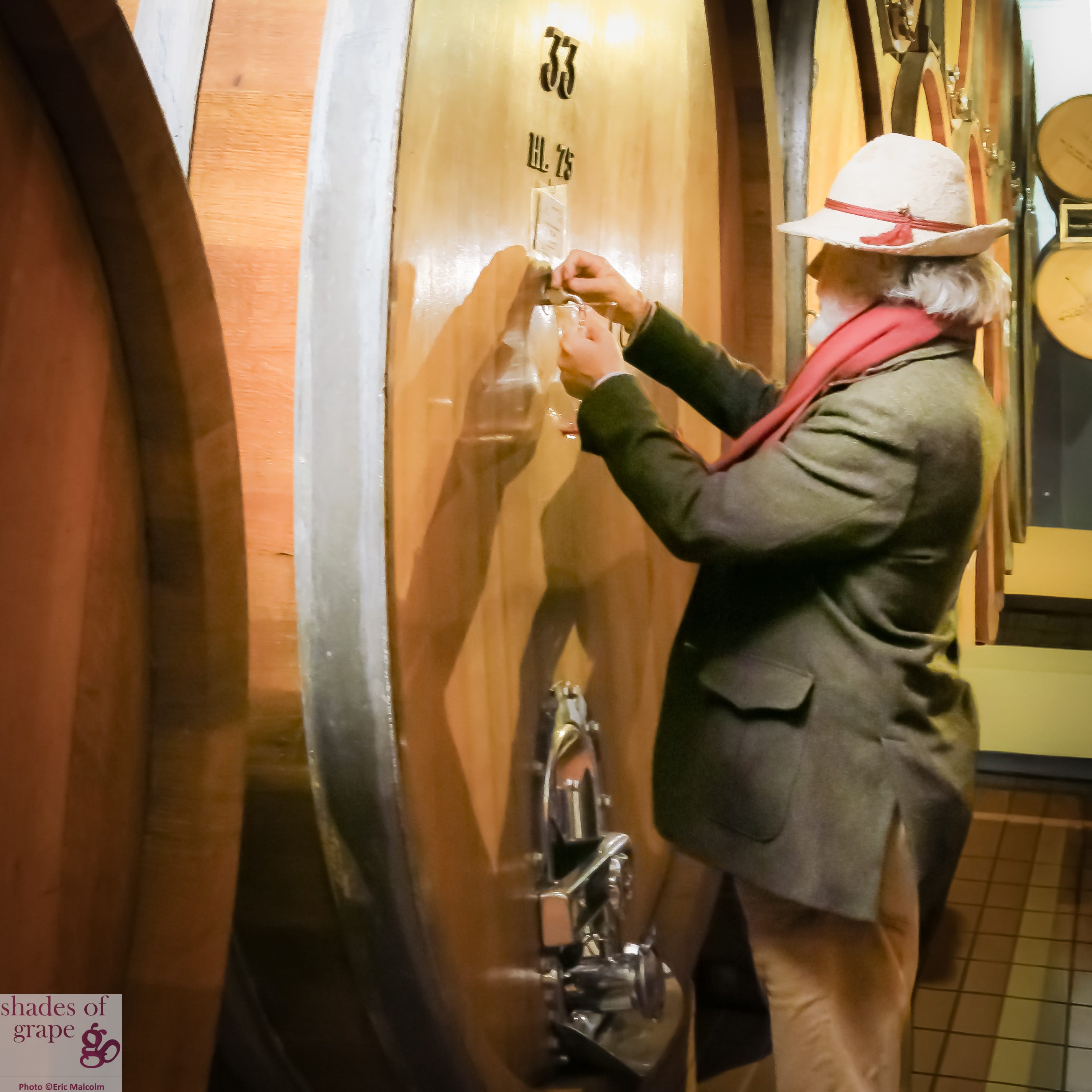
I chose a wine from Montalcino in Tuscany because it makes this point! The wine spends time in very large oak casks, but because the vessels are so large and used continually the wood flavours are not imparted into the wine. But oak in fact contributes so much more!
But first - the subregion.
Montalcino is in Tuscany, Italy, and is known for the famous Brunello di Montalcino. Today’s wine is a Rosso di Montalcino from Col D’Orcia winery, which we visited in 2023 after I wrote my last WSET Diploma exam.
(I have written about this subregion here before – you will find more information on this subregion here and here or see the links below.)
The wine in my glass has spent a year in 75 and 150 hectolitre (1 hectolitre is 100 litres, so these are big - almost 2000 and 4000 US liquid gallons!) Slavonian oak casks. A portion of the wine was also matured in concrete vats. This means the winemaker aged a portion of the wine in each cask size and a portion in concrete vats. Eventually all three wines were blended to make the final wine.
This wine has great texture from the extremely fine tannins that are in perfect harmony with the rest of the wine elements. The tannins have just the slightest grit like on a super fine sandpaper - this mouthfeel just screams quality to me!
All the structural elements (tannin, alcohol, and acidity) are in perfect accord! These are all things that proper oak maturation can provide!
Fun Fact: Count Francesco Marone Cinzano is at the helm of Col D’Orcia – and he is the first count I ever met!
You are not encountering (get it?) many counts roaming the streets of Canada, huh?
Count Cinzano is of the same family as the Cinzano Vermouth and Spirits brand. The family founded this company in 1757 and eventually sold it to the Campari Group in 1999. It wasn’t until 1973 that the Col D’Orcia winery was purchased by the Cinzano family.
Myth #3 – Oaking is just about flavouring the wine
There are many reasons to age wine in wood – flavours, texture, and structure integration.
Oaking wine slowly introduces oxygen into the wine. Wood is porous, so when a barrel or cask is empty oxygen will enter its pores. This oxygen will enter the wine, and some wine will eventually evaporate through these same pores. But most importantly, the wine encounters oxygen every time the wine is “manhandled” during the ageing process.
Huh?
Ageing wine needs significant attention to ensure things go correctly. Air is introduced every time the wine gets transferred into or out of a vessel and every time the bung is opened to top up the wine due to wine evaporation. Topping up prevents too much oxygen contact, which could result in the wine oxidizing. Oxidation imparts undesirable flavours, unless the style is deliberate oxidation like in some sherries and ports.
The result of introducing oxygen? Tannins soften, flavours integrate (sort of like a slow simmer on a soup or stew), and the wine’s structure components integrate - meaning alcohol, acidity, and tannins become “one” with the wine. Lastly, ageing can provide texture to a wine.
Texture is big in wine. Some wines’ texture doesn’t stand out, but others’ merit extra quality points as texture creates interest. Interest is what makes you want another sip and to buy another bottle.
Or twelve!
But I still don’t understand what you mean by texture in wine?
The Wine Enthusiast website compares wine texture to the tactile sensation of textiles in between your fingers: “Burlap, velvet, silk. The mention of these fabrics stirs a visceral reaction. You can imagine the rough, plush and slippery-soft textiles between your fingers.”
The same goes with wine except your mouth is what “feels”. Mouthfeel is the other term that is used to describe texture. The winemakers may age a wine in wood to achieve a certain texture.
Got it! I had no idea that oak was not just a flavour tool but actually a way to transform a wine!
Precisely! And the featured wine demonstrates just this! Check out more details on the wine below as well as the links to relevant past wine articles!
Enjoying my recommendations? Consider upgrading to a paid subscription.
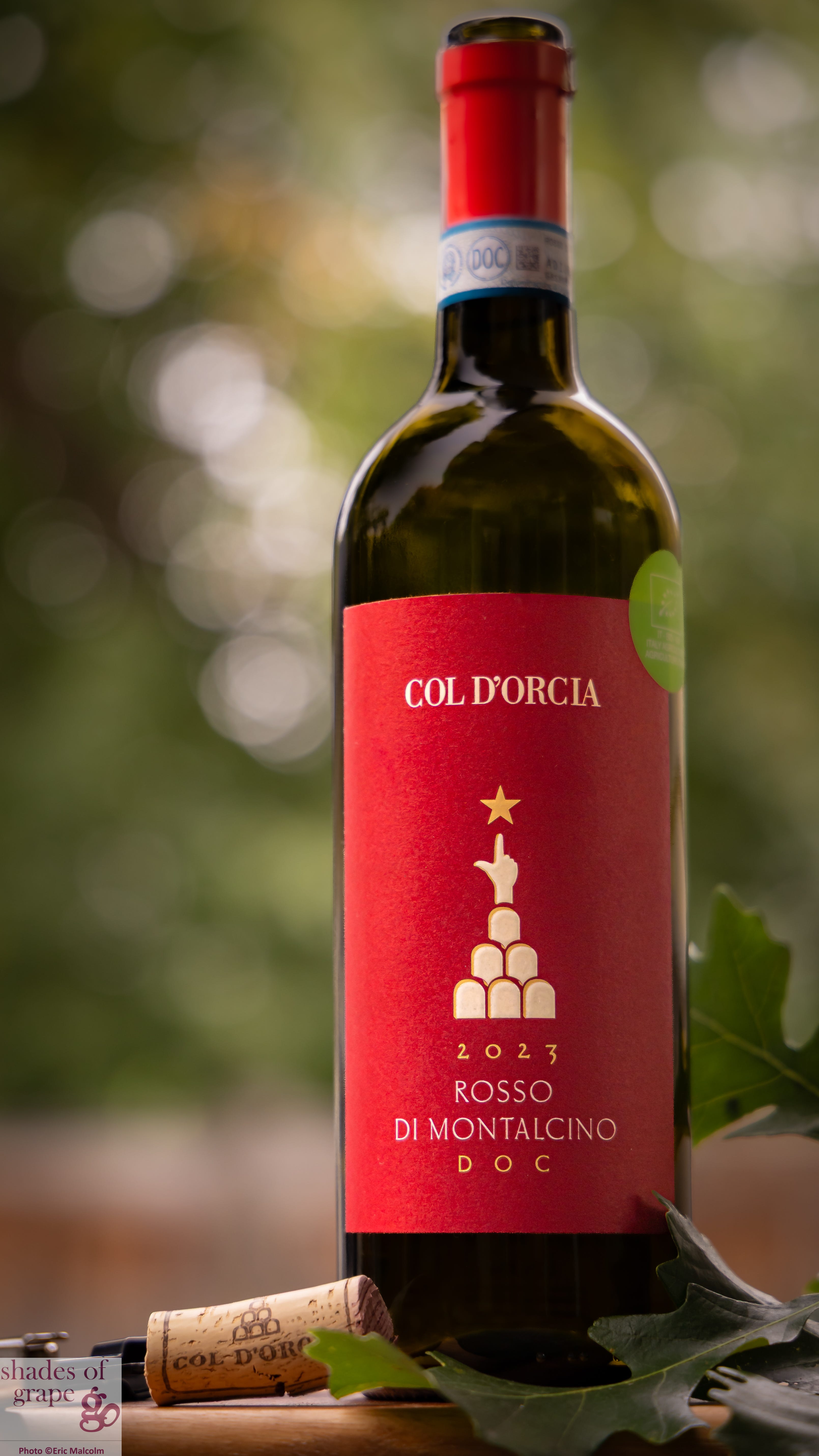
Col D’Orcia Rosso di Montalcino 2023, Tuscany, Central Italy
Style: Moderately full body red wine
Variety(ies): 100% Sangiovese
This intense wine spoke of violets, red cherry, and graphite with the slightest note of smoked meat right out of the bottle. This evolved to blueberry, black cherry, desicated cherry and blueberry, chocolate, sour cherry, and ripe dark cherry. It’s on the lighter side of full bodied, has the finest, ripe, high quality tannins - these really stood out for me - and a persistent finish.
Best pairings: Veal parmesan, Tagliatelle with Ragu, T-bone alla FIorentina, Lasagna Bolognese, Cheeses: Aged Pecorino (with Salami & Prosciutto of course)
Serving Temperature: 17 - 19 degrees Celsius
Serving Tips: Decant for about 30 minutes - a little longer if you are using a small decanter
Price: ~$38 Cdn
Relevant Shades of Grape links: Keep scrolling
If you're in Alberta and want a one-on-one wine curation experience, please reach out! No commitment or minimum purchase required. Interested? Please reach out!
A huge thank you to my paid subscribers—your support helps cover the costs of creating these weekly articles.
Love my wine recommendations? Enjoy my personal wine curation service? If you find value in my writing, consider upgrading to a paid subscription to help me keep sharing the world of wine with you!
Paid subscribers receive 15% off Wine & Spirits whenever shopping at Cork Fine Wines, ground floor, Bow Valley Square in downtown Calgary.
LINKS TO RELEVANT PAST SHADES OF GRAPE ARTICLES:


SOURCES:
Campari Group, 2025. Sale of Cinzano: Press release. [PDF] Available at: https://www.camparigroup.com/sites/default/files/downloads/20250626_Sale%20of%20Cinzano_Press%20Release%20ENG_9.pdf [Accessed 6 August 2026].
Cinzano, no date. Cinzano. [online] Available at: https://cinzano.com/en [Accessed 6 August 2026].
Col d’Orcia, no date. History. [online] Available at: https://coldorcia.it/en/history [Accessed 6 August 2026].
Col d’Orcia, 2023. Rosso di Montalcino 2023. [PDF] Available at: https://cdn.prod.website-files.com/69830d24de59887dfc4d43c8/6a54a35d4fabb6487a77b351_Rosso%20di%20Montalcino%202023_ENG.pdf [Accessed 6 August 2026].
Col d’Orcia, 2021. Brunello di Montalcino 2021. [PDF] Available at: https://cdn.prod.website-files.com/69830d24de59887dfc4d43c8/6a54964fa9614f1b949a373f_En%20Brunello%202021.pdf [Accessed 6 August 2026].
Consorzio del Vino Brunello di Montalcino, no date. Brunello di Montalcino DOCG. [online] Available at: https://www.consorziobrunellodimontalcino.it/en/583/wines#586-anchor [Accessed 6 August 2026].
Consorzio del Vino Brunello di Montalcino, no date. Rosso di Montalcino DOC. [online] Available at: https://www.consorziobrunellodimontalcino.it/en/583/wines#587-anchor [Accessed 6 August 2026].
Consorzio del Vino Brunello di Montalcino, no date. Sant’Antimo DOC. [online] Available at: https://www.consorziobrunellodimontalcino.it/en/583/wines#1352-anchor [Accessed 6 August 2026].
Harding, J. and Robinson, J., 2023. The Oxford companion to wine. Oxford: Oxford University Press.
Robinson, J., no date. Abruzzo’s new avant-garde: Part 2. [online] Available at: https://www.jancisrobinson.com/articles/abruzzos-new-avant-garde-part-2 [Accessed 6 August 2026].
Wine & Spirit Education Trust, 2025. D3: Wines of the World – An accompaniment to the WSET Level 4 Diploma in Wines. Version 1.2. London: Wine & Spirit Education Trust.
Wine Enthusiast, no date. What is texture in wine? [online] Available at: https://www.wineenthusiast.com/basics/texture-wine-definitione/ [Accessed 6 August 2026].
Had a 2021 of that RdM from Col d’Orcia recently. That smoked meat note was straight out of the bottle indeed!