
Drink better this year! I offer wine orders customized to your palate. Reach out for one-on-one curation time with me with no commitment or minimum purchase required.
Subscribing is a way to show your appreciation for:
my wine recommendations,
any assistance I provide along your wine journey, or
my writing entertainment!
Earlier this month, Cork hosted its second annual Champagne Fête, where around thirty Champagnes were popped and poured. That’s a lot of bubbles!
What surprised many guests was learning that white Champagnes can be made entirely of black grapes. These will often be labelled ‘Blanc de Noirs’ which directly translates to White from Blacks, referring to the white wine made from black grapes.
That’s because Pinot Noir and Pinot Meunier, Champagne’s black grapes, have colourless flesh and juice like most of the wine world’s black grapes.
So why are red wines red then?
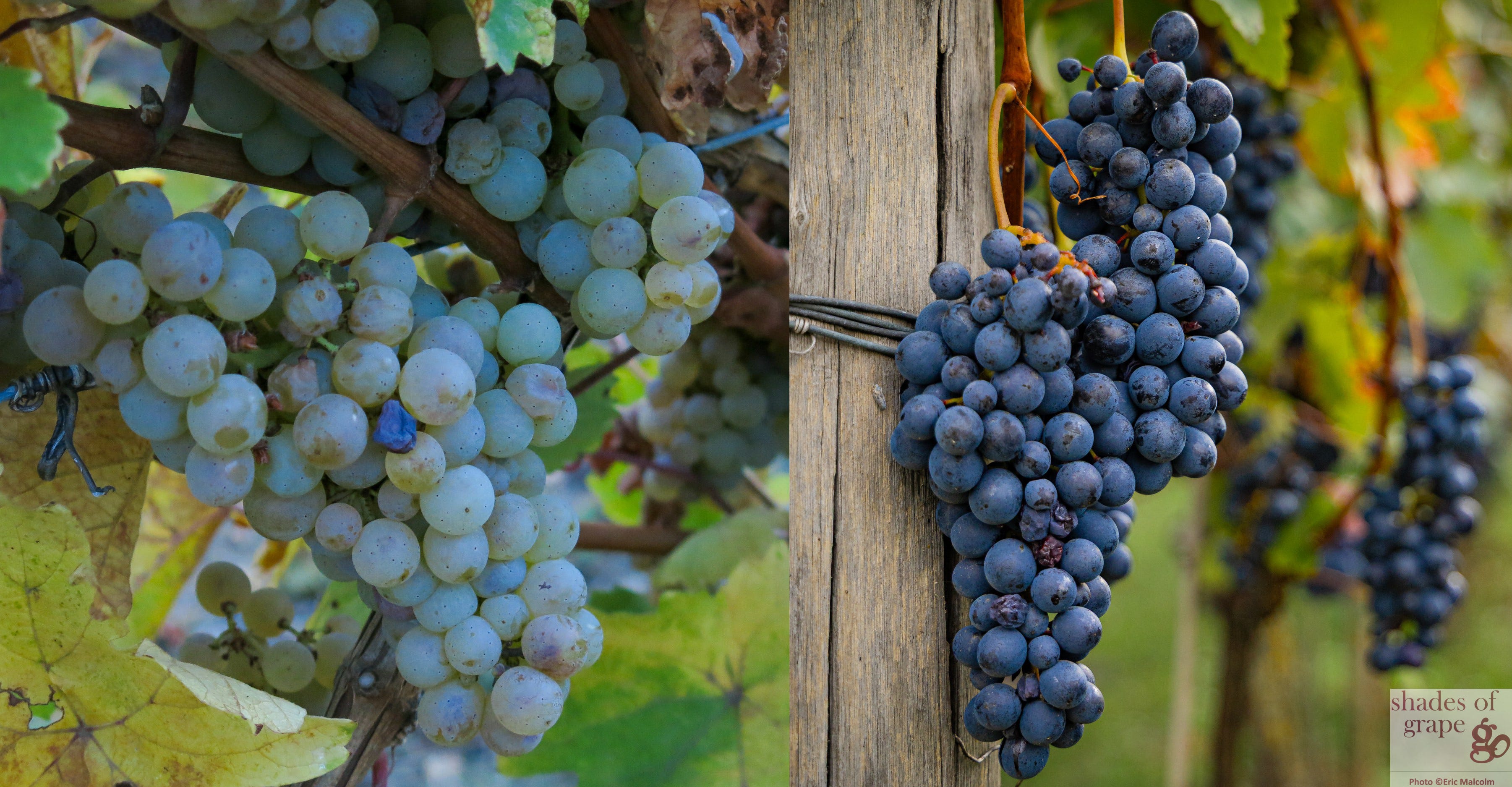
Most grapes’ colour pigments exist only in the skins. If the juice has minimal or no contact with those skins, the resulting wine is white.
Which leads me to the featured red wine, a blend which includes Garnacha Tintorera. It is one of the few wine making grapes that has a red flesh.
Isn’t Garnacha Tintorera a synonym for Grenache Rouge/Garnacha Tinto?
No, this grape is called Garnacha Tintorera and is a different grape variety than Garnacha Tinto.
Fun Fact #1 : A red-fleshed grape is called ‘teinturier’ in French and English, and ‘Tintorera’ in Spanish. Teinturier is the French word for ‘dyer’ in English, the profession of dyeing.
Fun fact #2: Garnacha Tinto is one of Garnacha Tintorera’s parents.
Garnacha Tintorera is also known as Alicante Bouschet, named after Henri Bouschet, who bred the Petit Bouschet grape with Garnacha Tinto in the late 1800s. The Petit Bouschet grape was created by his father Louis several decades earlier when he crossed the Aramon grape with a teinturier grape called Teinturier du Cher.
Why was breeding teinturier grapes important enough to warrant two generation of French grape breeders’ work? I suspect the 1800s presented humanity with sufficient challenges, no?
Turns out there was money to be made, because in the 19th century deeply coloured wines could fetch more money. Therefore, teinturier grapes were deliberately bred for the purpose of adding colour to wines. In the case of Louis Bouschet, the Aramon grape produced very pale wines whose vine was highly productive – yielding more wine per vine. Breeding it with the Teinturier du Cher in 1824 had the goal of producing the best of both worlds: high yielding and deeply coloured.
To be clear, deeply coloured wines are not necessarily better. Many highly valued wines are pale in colour – Nebbiolo, which produces Barolo and Barbaresco from Piemonte, Italy, produces wines that can be extremely pale in colour.
Pinot Noir, the main black grape in Burgundy, is also considered pale. Still, Burgundy wines are some of the world’s most sought-after wines, commanding ever increasing prices. Yet coincidentally, just last week in Henry Jeffreys’ very entertaining Substack, Drinking Culture, he mentions that he “was told in strictest confidence that one of the greatest Burgundy producers has some Alicante Bouschet… growing in his vineyard to boost the colour of his Pinot Noir.”
GASP!
To be clear, when labelled Bourgogne (Burgundy), Alicante Bouschet is not authorized to be included in the wine.
Where is Garnacha Tintorera/Alicante Bouschet grown?
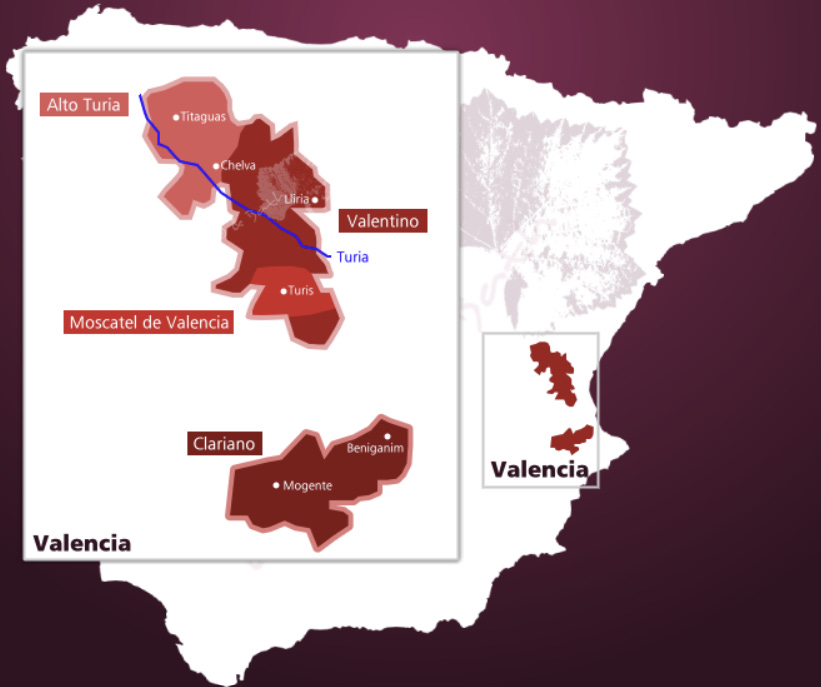
There are significant plantings in its homeland of France as well as in Portugal, but it is most extensively planted in Spain, so it is fitting that the featured wine comes from the Valencia wine region of Spain. As shown on the map below, the Valencia wine region is inland from the Mediterranean coast, with vineyards lying within two discrete blocks of land that are further broken down into four subzones.
The featured wine is from the Pago Casa Gran winery and is a blend of 60% Garnacha Tintorera, 20% Syrah, and 20% Monastrell. Scroll down for further featured wine deets and links to other related articles!
Who would have guessed that a Champagne tasting would lead us to a father-and-son grape breeding quest in the 19th-century France only to land on a red wine from Valencia!
Oh, what the wine world giveth! So many stories in these glasses of wine.
Salud!
Enjoying my recommendations? Consider upgrading to a paid subscription.
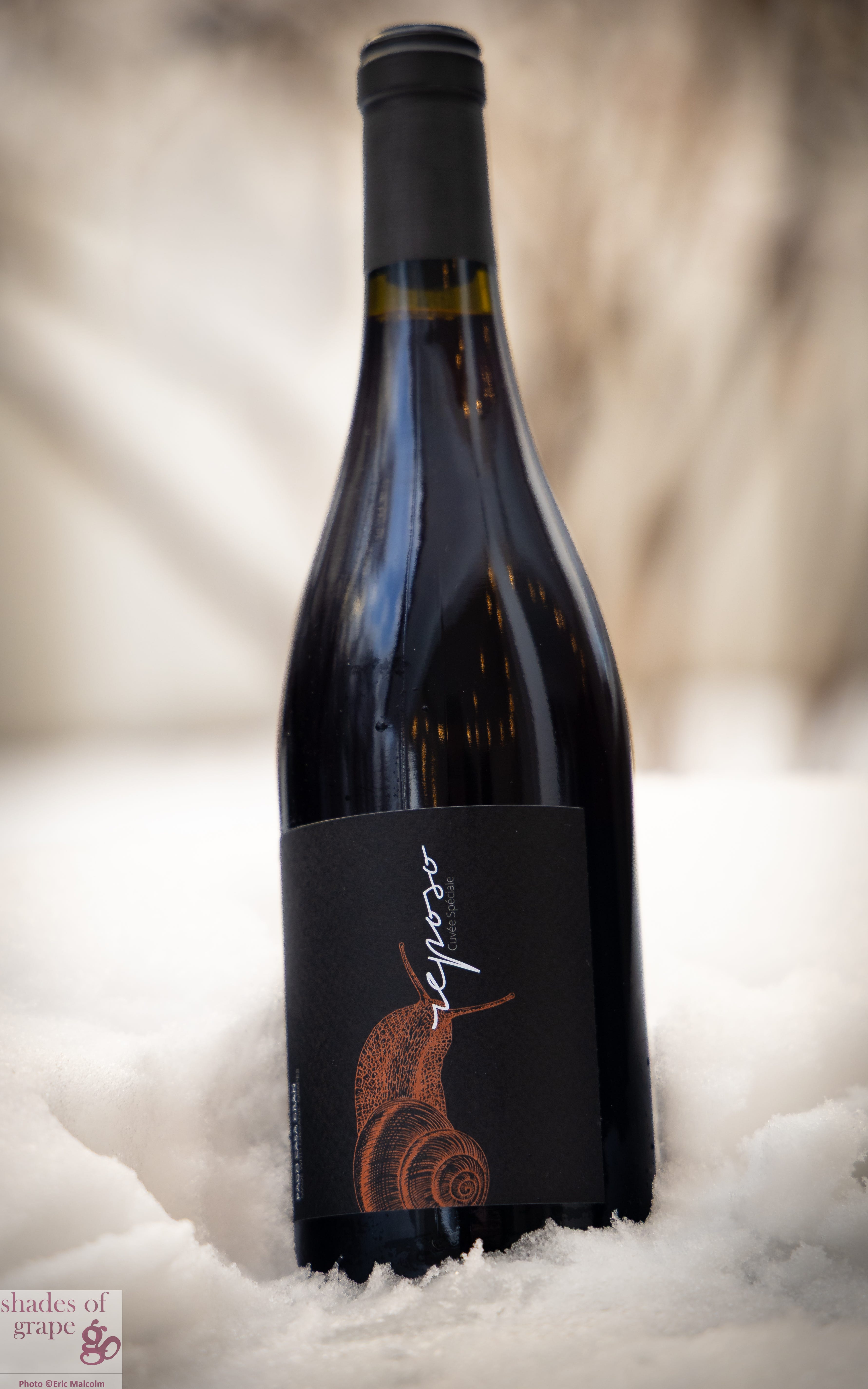
Pago Casa Gran ‘Reposo’ 2024 from Valencia, Spain
Style: Moderately Full Old-World Style Red Wine
Variety(ies): 60% Garnacha Tintorera, 20% Syrah, and 20% Monastrell
This savoury wine is ironically only medium ruby coloured. It has precise fruit flavours of ripe raspberry and strawberry, sweet red cherry, red plum, and blackberry with the complexity of earth, forest floor, dark chocolate, and herbal notes. This wine is an extremely good value for the quality with its moderately high chalky tannins and a very long finish.
Best pairings: Herb-crusted lamb chops with rosemary and garlic, Grilled pork tenderloin with paprika and herb rub, Chicken breast with mushrooms, garlic and fresh herbs, Pork medallions with a creamy wild mushroom sauce, Roasted red pepper and goat cheese tart, Pizza. Cheeses: Baked brie topped with berry compote and Manchego.
Serving Temperature: 17 - 19 degrees Celsius
Serving Tips: Decant for a minimum of 30 minutes to get the complexity of flavours coming through.
Price: ~$25 Cdn
Relevant Shades of Grape links: Keep scrolling
If you're in Alberta and want a one-on-one wine curation experience, please reach out! No commitment or minimum purchase required. Interested? Please reach out!
A huge thank you to my paid subscribers—your support helps cover the costs of creating these weekly articles.
Love my wine recommendations? Enjoy my personal wine curation service? If you find value in my writing, consider upgrading to a paid subscription to help me keep sharing the world of wine with you!
Paid subscribers receive 15% off Wine & Spirits whenever shopping at Cork Fine Wines, ground floor, Bow Valley Square in downtown Calgary.
LINKS TO RELEVANT PAST SHADES OF GRAPE ARTICLES:


SOURCES:
1. Atragos (n.d.) Reposo Tinto – D.O. Valencia – Pago Casa Gran. [online] Available at: https://atragos.com/tienda/reposo-tinto-d-o-valencia-pago-casa-gran/ [Accessed 19 November 2026].
2. Hemming, R. (2016) ‘Can colour influence taste?’, Decanter, 24 May. [online] Available at: https://www.decanter.com/features/can-colour-influence-taste-245901/ [Accessed 19 November 2026].
3. Harding, J. and Robinson, J. (2023) The Oxford Companion to Wine. Oxford: Oxford University Press.
4. Pago Casa Gran (n.d.) Los vinos. [online] Available at: https://www.pagocasagran.com/los-vinos/ [Accessed 19 November 2026].
5. PS-Wein (n.d.) Wein und Weinbau in Valencia. [online] Available at: https://www.ps-wein.de/wein-info/laender-regionen/spanien/valencia [Accessed 19 November 2026].
6. University of California, Davis (n.d.) Foundation Plant Services – grapevine family relationships. [online] Available at: https://ngr.ucdavis.edu/FGRfamilies.cfm?varietyid=173 [Accessed 19 November 2026].
7. Wine & Spirit Education Trust (2025) D3: Wines of the World – An Accompaniment to the WSET Level 4 Diploma in Wines. Version 1.2. London: Wine & Spirit Education Trust.