

Drink better this year! I offer wine orders customized to your palate. Reach out for one-on-one curation time with me with no commitment or minimum purchase required.
Subscribing is a way to show your appreciation for:
my wine recommendations,
any assistance I provide along your wine journey, or
my writing entertainment!
This story begins with liqueur.
Grand Marnier specifically.
But first let’s take a step back in time.
Jean Baptiste Lapostolle founded a fruit liqueur distillery outside of Paris in 1827. Almost 50 years later, his grand-daughter Julia married Louis-Alexandre Marnier. Marnier’s family were wine and spirits merchants in the Loire Valley.
The marriage sealed a deal and voilà - La Maison Marnier-Lapostolle was born. A few years later, the groom decided to blend Cognac with high quality Bigarade oranges. You may have guessed it … this was the first batch of Grand Marnier! This recipe was a first of its kind and has stayed the same since!
I’m curious about these oranges.
These are a type of bitter orange also called Seville oranges.
Too bitter to eat?
Generally, yes. They are typically used for flavouring, including using their highly aromatic peels. In addition to Grand Marnier, they are used to make marmalade, perfumes, and sometimes for cooking.
Shall we get to the wine portion now?
Right!
The family story continues but on a different continent! The great-granddaughter of Julia and Louis-Alexandre, Alexandra Marnier Lapostolle, and her husband Cyril de Bournet formed Lapostolle winery in 1994 in Chile. Their vineyards are specifically in the Colchagua Valley of the Chile’s Central Valley wine region.
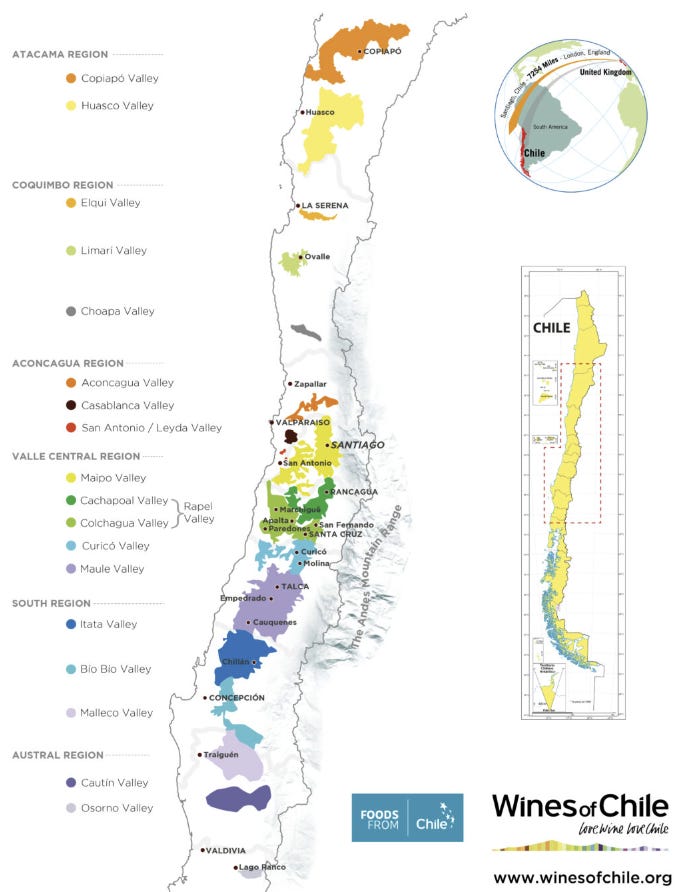
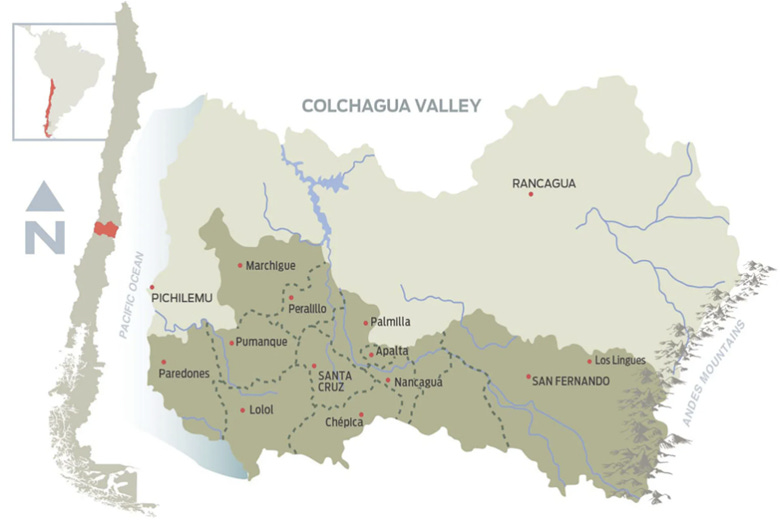
This couple knew what they were doing. They zoned in on the Apalta subregion which now has a reputation of making high quality wine due to the prime grape growing conditions.
Apalta is a wine subregion near the town of Santa Cruz, 170 Kilometres (100 miles) southwest of Santiago. Apalta is situated on a north to south exposure, which is quite rare in Chile. The Tinguiririca river rests on the southern side, and the hills of the Coastal Cordillera surround the vineyard like a horseshoe. Both are integral in forming this unique terroir.
What can you say about Chilean wines?
By far, Cabernet Sauvignon is the most planted grape of Chile. According to Wines of Chile, Chile produces 15% of the world’s Cab Sauv. However, their signature grape is Carmenère, even though it is often used as a blending grape, as in today’s featured wine. Other key black grapes grown in Chile are Merlot, Syrah, and Pinot Noir.
Does Chile produce whites?
Yes, mainly Sauvignon Blanc and Chardonnay.
Can we talk Chile geography?
Chile is very unique geographically. It is the world’s longest and narrowest country. It is approximately 4300 km (2700 miles) long in the north-south direction and has an average width of 175 km (110 miles). Its west coast is shaped by the Pacific Ocean, with the Andes mountain range to the east forming its border with neighbouring Argentina.
Chile has six wine regions: Atacama is the most northern, followed by Coquimbo just to the south, then Aconcagua, the Central Valley (from which the featured wine comes), the Southern region, and finally Austral, the southernmost region.
Back to Lapostolle, please!
Today, Alexandra and Cyril’s son Charles de Bournet leads Lapostolle, representing the 7th Marnier-Lapostolle generation. The featured wine from Lapostolle is a Bordeaux-style blend consisting of 54% Cabernet Sauvignon, 23% Merlot, 10% Carmenère, 7% Cabernet Franc, and 6% Syrah.
What is a Bordeaux-style blend?
A wine that is made with at least two or more of the following black grapes, which are the grapes authorized to make Bordeaux red wine in the French wine region: Cabernet Sauvignon, Merlot, Cabernet Franc, Carmenère, Malbec, and Petit Verdot.
Often wines that are blends are given a name. This one is named Apalta, the same name as its subregion.
Apalta from Apalta!
Exactly!
Cannot wait to try it out, right after I check out your wine description and further article links below.
Enjoying my recommendations? Consider upgrading to a paid subscription.
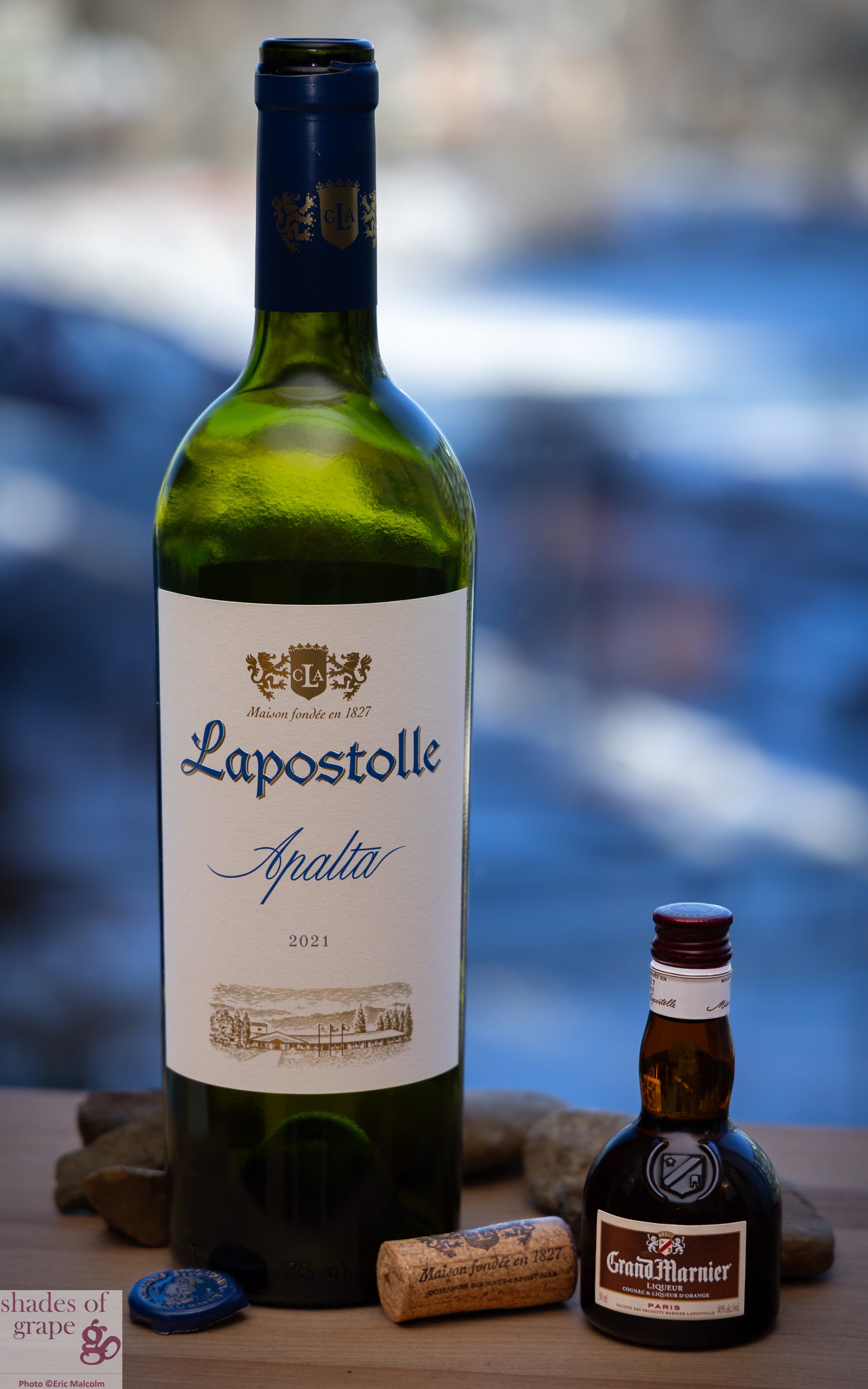
Lapostolle ‘Apalta’ 2021, from Apalta, Colchagua Valley, Chile
Style Moderately Full Body Red Wine
Varieties: 54% Cabernet Sauvignon, 23% Merlot, 10% Carmenère, 7% Cabernet Franc, & 6% Syrah
This expressive dry wine has flavours of red currant, fresh red cherry, very ripe red cherry, black currant, cloves, thyme, sage, tomato leaf, and mint on the finish. It also has the additional complexity of cedar, vanilla, chocolate, and wet leaves. The wine has moderate intensity, moderately high ripe tannins with a slight grip, and a persistent finish.
Best pairings: Red meats: Grilled steak, roast lamb, or beef tenderloin, Hearty stews: Beef bourguignon or lamb stew, Rich dishes: Beef Stroganoff, and Cheese: blue cheese, or aged cheddar
Serving Temperature: 16-18 degrees Celsius
Serving Tips: Decant for approximately 1 hour to get the full complexity of the wine.
Price: ~$30 Cdn
Relevant Shades of Grape links: Keep scrolling
If you're in Alberta and want a one-on-one wine curation experience, please reach out! No commitment or minimum purchase required. Interested? Please reach out!
A huge thank you to my paid subscribers—your support helps cover the costs of creating these weekly articles.
Love my wine recommendations? Enjoy my personal wine curation service? If you find value in my writing, consider upgrading to a paid subscription to help me keep sharing the world of wine with you!
Subscribers receive 15% off Wine & Spirits whenever shopping at Cork Fine Wines, ground floor, Bow Valley Square in Calgary.
LINKS TO RELEVANT PAST SHADES OF GRAPE ARTICLES:


SOURCES:
Chatelaine, no date. Out and about: Alexandra Marnier Lapostolle. [online] Available at: https://chatelaine.com/recipes/chatelainekitchen/out-and-about-alexandra-marnier-lapostolle/ [Accessed 18 December 2025].
Grand Marnier, no date. Grand Heritage. [online] Available at: https://www.grandmarnier.com/grand-heritage/?utm_source=chatgpt.com [Accessed 18 December 2025].
Harding, J. and Robinson, J., 2023. The Oxford companion to wine. Oxford: Oxford University Press.
Lapostolle Wines, no date. Domaine: History. [online] Available at: https://lapostollewines.com/domaine/#history [Accessed 18 December 2025].
Lapostolle Wines, no date. FC_LW_AP_2022_EN (PDF). [online] Available at: https://lapostollewines.com/wp-content/uploads/2025/01/FC_LW_AP_2022_EN.pdf [Accessed 18 December 2025].
Vinum Lector, no date. Lapostolle Apalta, Colchagua Valley, Central Valley, Chile. [online] Available at: https://vinumlector.com/our-wine/chile/central-valley/colchagua-valley/lapostolle-apalta/?utm_source=chatgpt.com [Accessed 18 December 2025].
Wine & Spirit Education Trust, 2025. D3: Wines of the World - An accompaniment to the WSET Level 4 Diploma in Wines. Version 1.2. London: Wine & Spirit Education Trust.
Wine Anorak, 2022. New wave Chile is here, with a little help from South Africa: The wines of Longaví. [online] Available at: https://wineanorak.com/2022/02/10/new-wave-chile-is-here-with-a-little-help-from-south-africa-the-wines-of-longavi/ [Accessed 18 December 2025].
Wine Enthusiast, no date. Colchagua Valley, Chile wine guide. [online] Available at: https://www.wineenthusiast.com/culture/wine/colchagua-valley-chile-wine-guide/?srsltid=AfmBOormPWONO9dCtWuiulvUX0Trk1r7uJHYs86kPhwpSOBeg0bg8-QU [Accessed 18 December 2025].
Wines of Chile, no date. Denominations of origin. [online] Available at: https://www.winesofchile.org/denominations-of-origin/ [Accessed 18 December 2025].
Shades of Grape, no date. From mistaken identity to signature. [online] Available at: https://www.shadesofgrape.ca/p/from-mistaken-identity-to-signature?utm_source=publication-search [Accessed 18 December 2025].
Interesting connection - had no idea! Beautiful wine and estate though! Was lucky enough to visit them (and Clos Apalta) in 2024 and would highly recommend it to anyone planing to visit Chile!
So interesting and another great read. Love the history and connections